| Topic | Details |
|---|---|
| Common Name | King Cobra |
| Scientific Name | Ophiophagus hannah |
| Kingdom | Animalia |
| Phylum | Chordata |
| Class | Reptilia |
| Order | Squamata |
| Family | Elapidae |
| Genus | Ophiophagus |
| Species | O. hannah |
| Type | Venomous Snake |
| Conservation Status | Vulnerable |
| Lifespan | Approximately 20 years in the wild |
| Average Length | 3–4 meters (10–13 feet) |
| Maximum Length | Up to 5.5 meters (18 feet) |
| Average Weight | 6–10 kg (13–22 lbs) |
| Habitat | Tropical rainforests, bamboo thickets, mangrove swamps, and grasslands |
| Geographic Range | India, Bangladesh, Nepal, Bhutan, Myanmar, Thailand, Malaysia, Indonesia, Philippines, and southern China |
| Diet | Carnivorous |
| Primary Food | Other snakes, including venomous species, as well as lizards and small mammals |
| Predators | Mongooses, large birds of prey, and humans |
| Venom Type | Neurotoxic venom that affects the nervous system |
| Hunting Method | Tracks prey using its keen sense of smell and delivers a venomous bite |
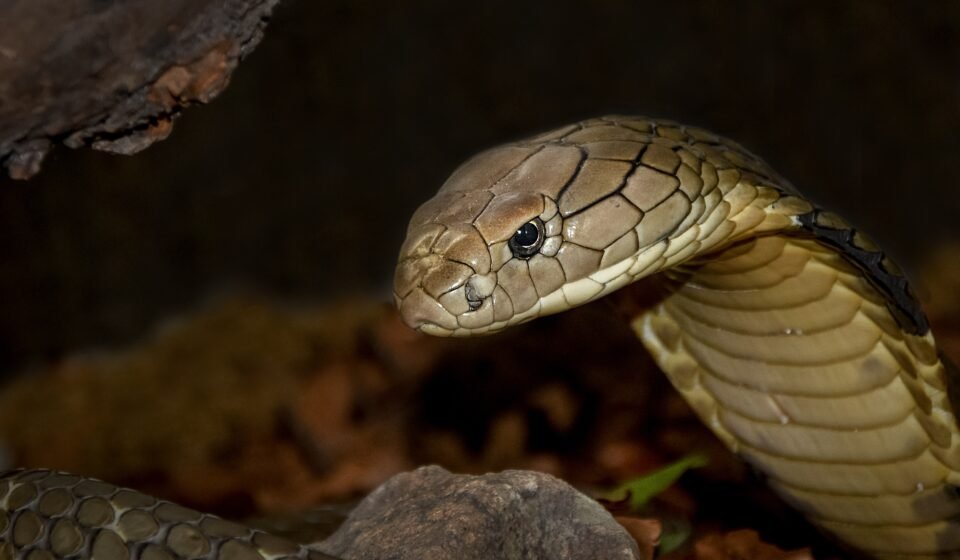
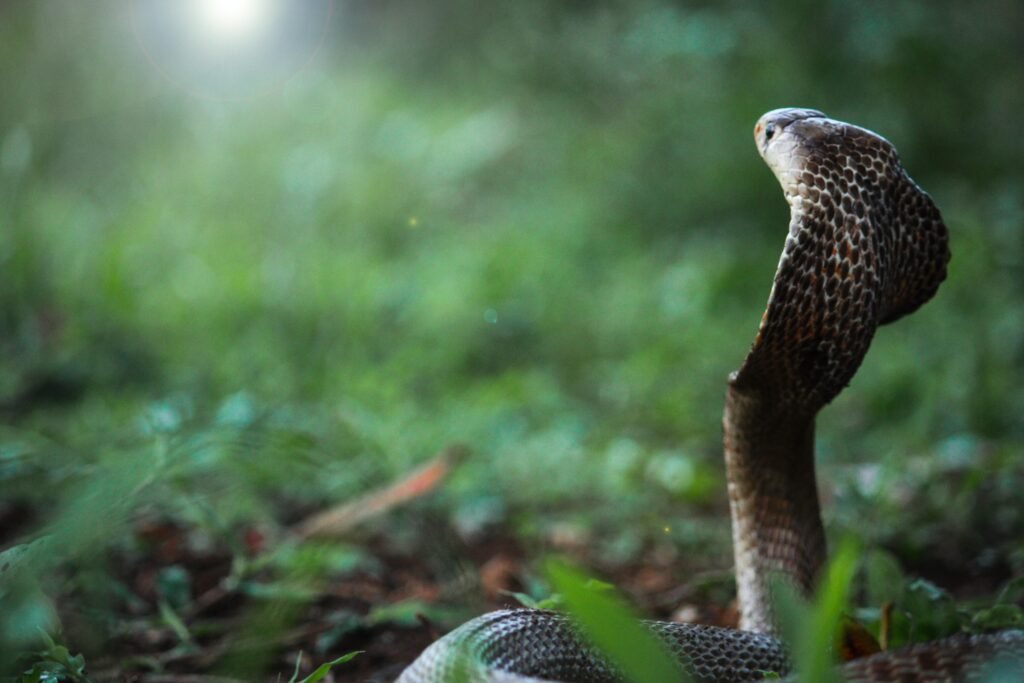
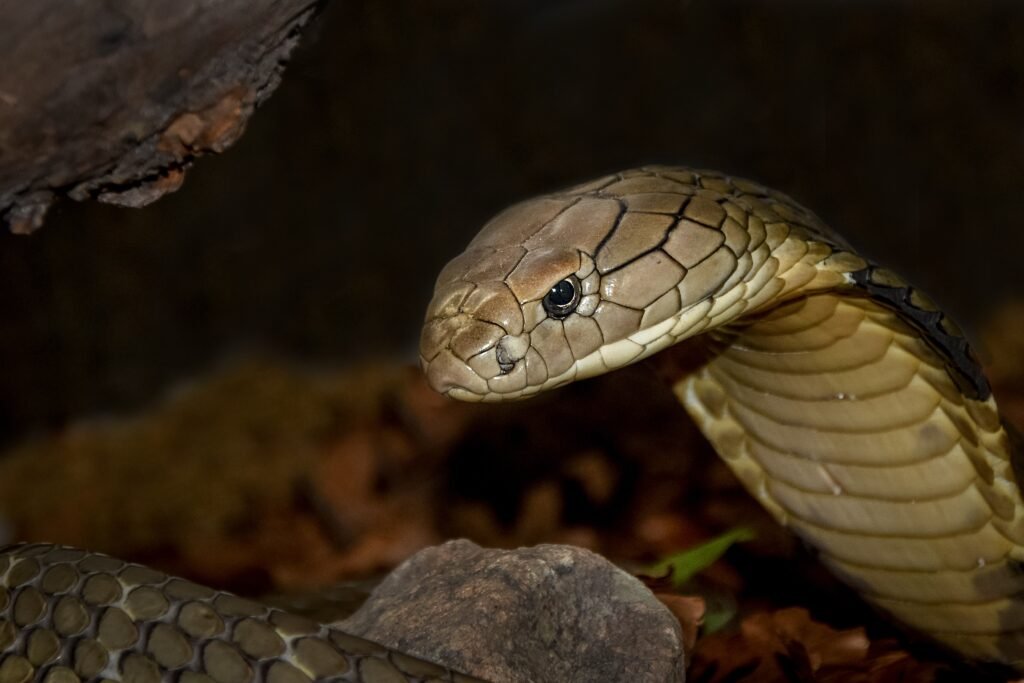
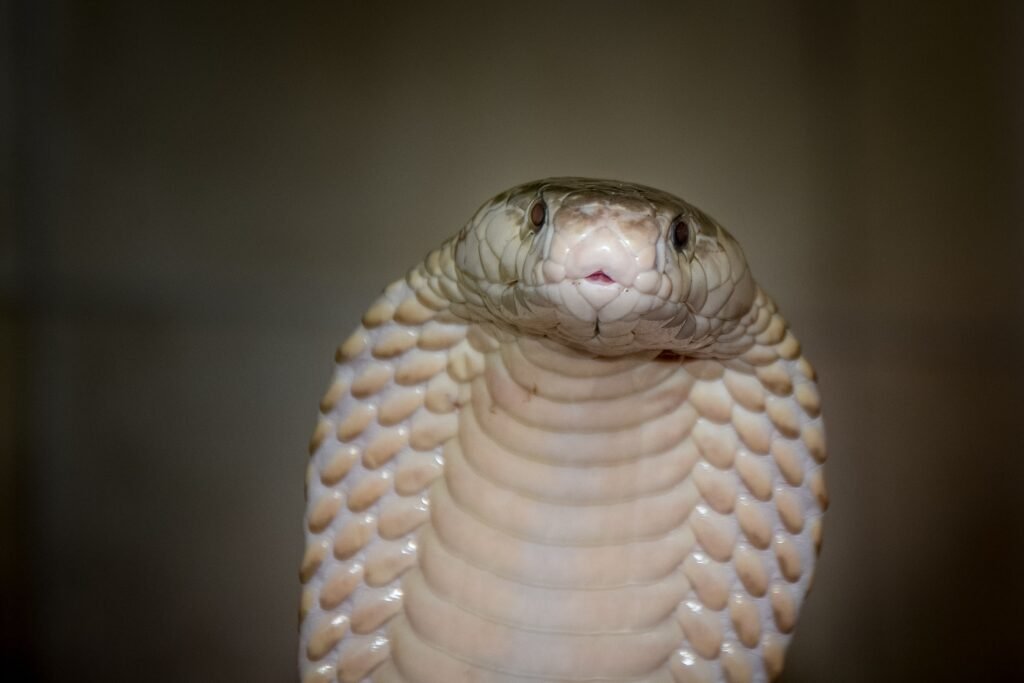
| Body Features | Long slender body, olive-green to black coloration, expandable hood, and large head |
| Speed | Can move surprisingly fast for a large snake |
| Behavior | Generally shy and avoids humans but becomes highly defensive when threatened |
| Reproduction | Oviparous (egg-laying); females lay 20–40 eggs |
| Unique Nesting Behavior | The only snake species known to build and guard a nest for its eggs |
| Activity Pattern | Mostly diurnal (active during the day) |
| Ecological Role | Helps control populations of snakes and other small animals |
| Major Threats | Habitat destruction, deforestation, road mortality, and illegal wildlife trade |
| Interesting Fact | The King Cobra is the world’s longest venomous snake and can raise up to one-third of its body off the ground when threatened. |